Is The Capital One Venture X Business Worth It?
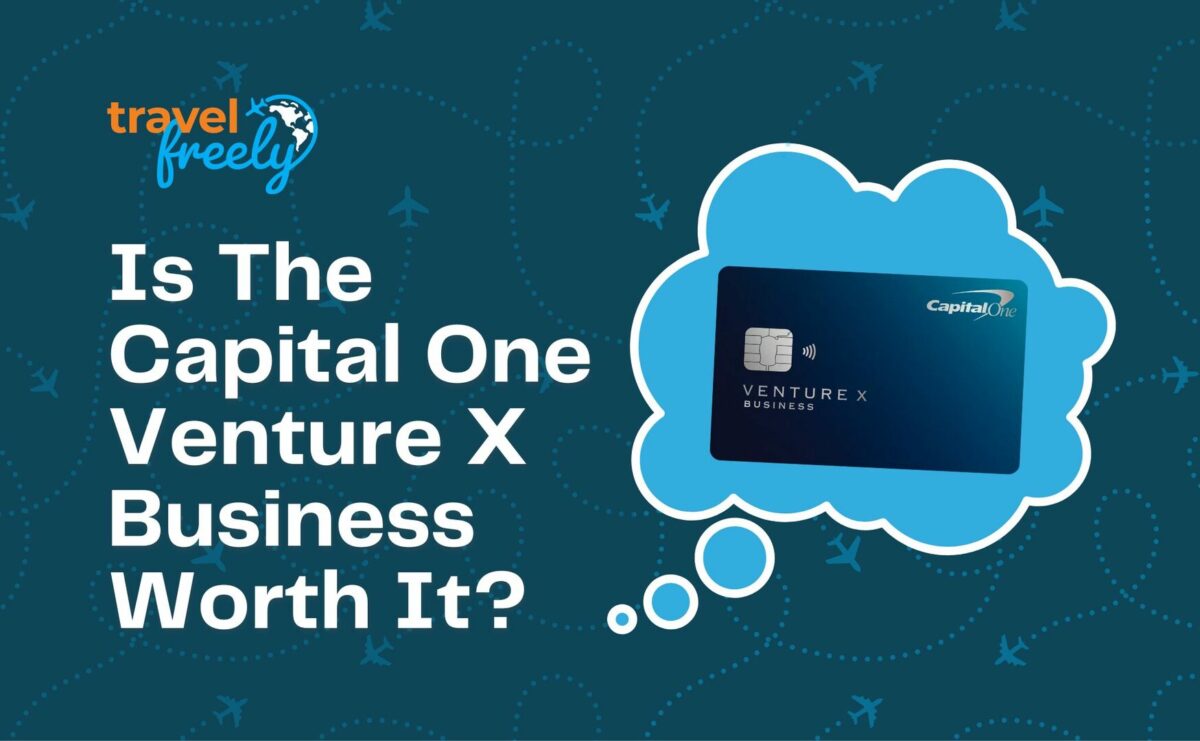
Capital One is certainly carving out its own unique path with a high spending threshold to secure the sign-up bonus of the Capital One Venture X Business card. This spending requirement is overwhelming, but let’s put on our thinking caps, crunch those numbers, and work out whether this card could be a valuable addition to your wallet now or perhaps in the future.
Important 5/24 Note: Will this count towards 5/24? Unlike other business cards, every Capital One business card (except the Spark Cash Plus) has counted towards 5/24. However, there is now plenty of historical evidence this card will NOT count towards 5/24.
Disclaimer: If you decide to open up one of these cards, we’d love for you to sign up using one of our links on this page. We work hard to bring our app and content to you for free. By using the links on our site to apply for credit cards, you’ll help support the site in a big way.
What is the Current Welcome Offer?
Spending Categories
- Earn 10x on hotels and rental cars booked through Capital One Business Travel
- Earn 5x on flights booked through Capital One Business Travel
- Earn unlimited 2x everywhere else
Travel Perks
- $300 annual credit for bookings made via Capital One Business Travel
- Unlimited access for the cardholder to 1,300+ lounges including Capital One Lounge and Landing locations and participating Priority Pass™ lounges, after enrollment.
- Ability to bring additional guests with you for an additional fee:
- Authorized users pay $125/year for unlimited Priority Pass and Capital One lounge access
- Guest access to Capital One Lounges and Landings: $45/person, per visit ($25 for kids under 17, free under age 2)
- Spend $75,000 annually on the card and you’ll receive complimentary access for up to 2 guests at Capital One Lounges and up to 1 guest at Capital One Landings.
- Up to $120 credit for Global Entry or TSA PreCheck®
- Earn 10,000 bonus miles on each account anniversary
- $50-$100 experience credit at the Premier & Lifestyle Collections (depending on the property)
Extra Benefits
- Add employee cards and virtual cards for free, set customized limits, track spending, and earn rewards from their purchases
- Other benefits include trip cancellation/interruption reimbursement, travel accident insurance, lost luggage reimbursement, trip delay reimbursement, cell phone protection, and extended warranty protection
- No preset spending limit
Remember, you earn 2x miles on every purchase, so meeting the $30,000 minimum spend earns about 60,000 miles on top of the 150,000-mile welcome bonus. We count only the welcome bonus toward the first-year value below. The miles you earn from spending come from money you were going to spend anyway, so the 2x earning is a nice ongoing benefit, not part of the offer’s value.
Is the card worth the high minimum spend?
The welcome bonus is 150,000 miles. At a redemption value of 1.45 cents per mile (based on transferring miles to a partner loyalty program), that bonus is worth about $2,175. The $300 travel credit is a once-a-year discount you apply at checkout on a Capital One Business Travel booking, so if you’re already booking a flight or hotel through the portal, it takes a big chunk out of the $395 annual fee and brings the fee close to a wash in year one. Just know it works like a coupon toward a booking, not a flexible statement credit, so you’ll want to have a trip in mind to use it on. We don’t count the Global Entry / TSA PreCheck credit (most of our readers already have it from another card, and it only comes around every few years), and we leave out lounge access, the experience credits, and anniversary miles, since they either take tracking or don’t apply to everyone.
Things to keep in mind
1. You must be aware of the card application rules for Capital One. You will not be approved unless you are clear of these rules…
To get this card, you must wait up to 6 months after applying for a Capital One card before you can be approved for another Capital One card. This applies to personal and business cards.
2. This card requires more spending (a lot more).
You must spend $30,000 within the first 3 months of being approved: $10,000 per month in spend to receive the bonus offer. That’s a tall order for a lot of small and medium-sized businesses. One strategy would be to use this card to pay taxes if you have a big quarterly tax payment due or even your annual tax return in April (depending on the timing of your application). However, do NOT get sucked into more spending than usual in order to hit this bonus.
3. Approval odds.
Capital One has been known to be unpredictable on approvals for their premium cards for people who have gotten quite a few cards in the past year. Previously, the only way to apply for the Venture X Business Card was through a Capital One relationship manager. Even if you have excellent credit, it doesn’t guarantee approval, and with Capital One it is notoriously difficult to predict approval odds. Additionally, despite being business cards, Capital One business cards (like the Spark Miles for Business) are known to count towards 5/24.
4. No payment terms
This is a pay-in-full card, so your balance is due in full every month, but you also have no pre-set spending limit.
How to Use Your $300 Capital One Business Travel Credit
The $300 travel credit is one of the main reasons this card’s annual fee is easier to swallow, so it’s worth knowing exactly how it works before you count on it. Unlike some popular credit cards, such as the Chase Sapphire Reserve, the travel credit works more like a coupon towards a booking — not a statement credit. You need to book travel through the Capital One Business Travel portal, and the travel credit comes off the price immediately. Here’s what that means in plain English:
- It’s a discount at checkout, not a statement credit. When you book a flight, hotel, rental car, or vacation rental through Capital One Business Travel, you’ll see the option to apply your credit on the payment screen, and it reduces what you owe on the spot.
- You can use it all at once or split it up. The $300 can cover one booking in full or be spread across several bookings during your cardmember year, until it’s used up.
- It resets each year and does not roll over. The credit refreshes on your account anniversary. If you don’t use it during your cardmember year, you lose it, so plan to put it toward a trip you’re already taking.
- It only counts on Capital One Business Travel bookings. A few charges are excluded, for example resort fees you pay directly to the hotel at check-in, since those don’t go through Capital One Travel.
Earning miles: Because the discount lowers the amount you actually pay, you do not earn miles on the portion the $300 covers. However, you still earn miles on anything you pay out of pocket above the credit. For example, if you book a $450 hotel through the portal and apply the full $300, you’d earn 10x miles on the remaining $150 you pay, not on the full $450.
The bottom line: Treat the $300 as a near-automatic discount on a trip you were going to book through Capital One Travel anyway. Used that way, it takes a real bite out of the $395 annual fee with very little effort.
How does this travel rewards card stack up to the others?
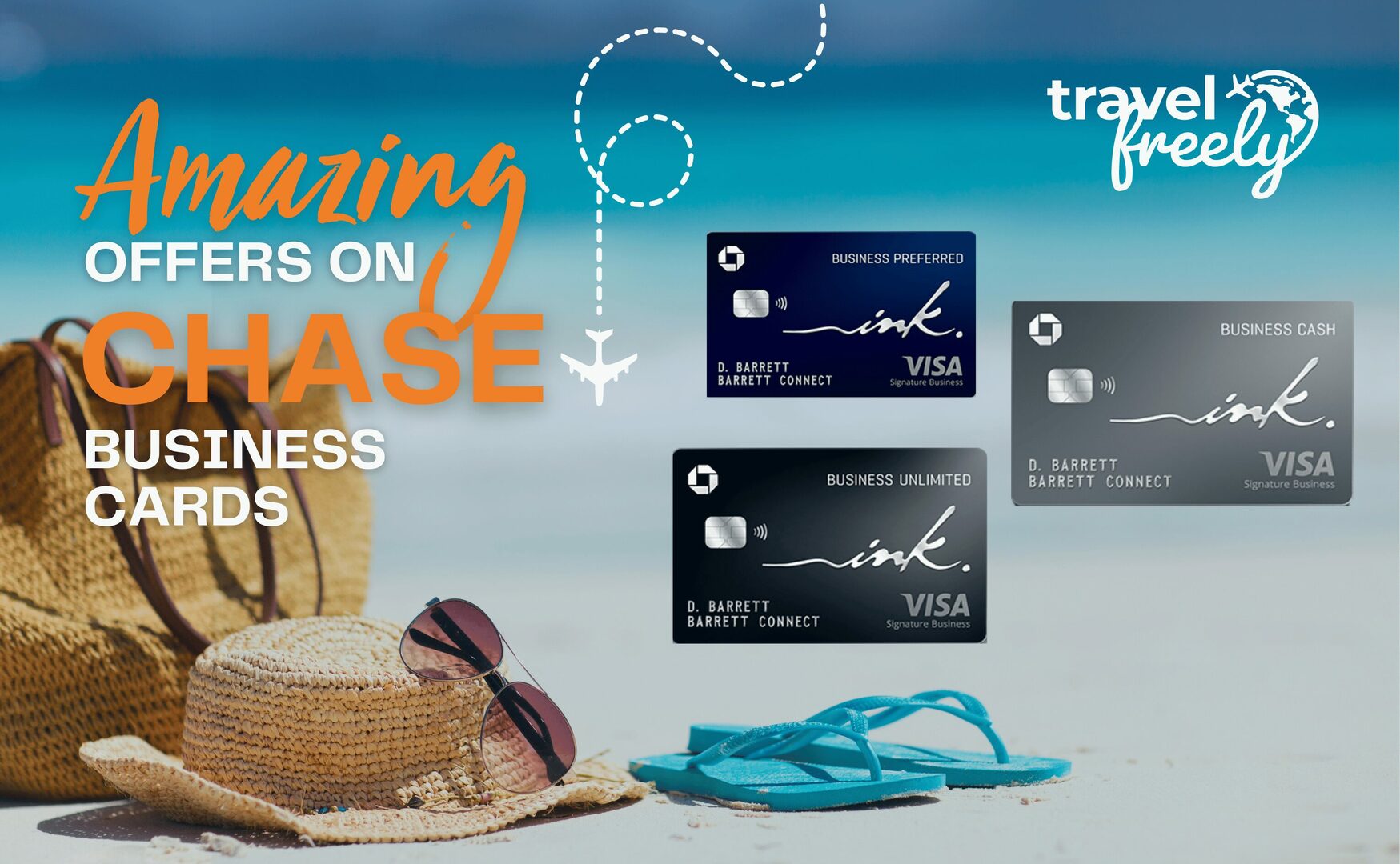
Here are three other top business cards right now:
Are two cards better than one?
Consider this: What welcome bonuses could you get from a different business card or two?
One eligibility note first. The Ink Business Cash® Credit Card and Ink Business Unlimited® Credit Card are now part of the same card family, so you can generally earn the welcome bonus on only one of the two, not both. The Ink Business Preferred® Credit Card is a separate card, so a realistic plan today is the Ink Business Preferred plus one of the two no-annual-fee Inks (either the Ink Business Cash or the Ink Business Unlimited). Chase will typically display a message before you submit your application, letting you know if you’re not eligible, so you can avoid an unnecessary hard credit check.
With that pairing, you would walk away with 175,000 total bonus points for $14,000 in total spending ($8,000 on the Ink Business Preferred and $6,000 on the no-annual-fee Ink) and just $95 in annual fees, since one of the two cards has no annual fee. You would also spread the applications out at your own pace, which makes the spending easier to cover.
We value Chase Ultimate Rewards® points at 1.5 cents each. Here’s the math:
The Ink Business Preferred bonus of 100,000 points is worth about $1,500, and the no-annual-fee Ink bonus of 75,000 points is worth about $1,125. Together that’s about $2,625 in combined first-year value, for $14,000 in total spend and $95 in total fees.
That still puts this two-card Ink plan about $550 ahead of the Capital One Venture X Business in first-year value, with a good deal less required spend ($14,000 across two cards at your own pace, versus $30,000 in three months for the Venture X Business). If you still want the perks and benefits of the Venture X Business without the high minimum spend, then simply consider the Capital One Venture X Rewards Credit Card personal card.
However, I see all four as great options based on your spending and your situation.
One way this card makes a lot of sense:
A number of business owners only want one or two cards to put all their spending on. And many have random big monthly expenses that would otherwise earn 1 – 1.5x with other cards. The Venture X Business has a chance to be more attractive to medium to larger business owners, especially if it’s more about big spending than using multiple cards. For example, my brother’s business has a lot of expenses each month, and he could probably hit these bonus requirements. In addition, he does not like to juggle cards for his business. So, this card could be a good short-term and long-term option for him.
Capital One “Miles” also work differently. If you have any kind of big travel coming up in the next 6 months (or a vacation rental or cruise deposit due), this card can be used similar to cash back. You use the card for the travel expenses, then use miles to reimburse yourself for part or all of the purchase.
What would Zac do?
After giving it some thought, I have decided I will not apply for this card right now. Spending $30,000 still within just a three month time period is a lot. I’d only consider applying if I had a major expense or tax bill that could help me meet the minimum spend requirement.
Here are a few thoughts:
- If you have high monthly spend on your business, then this card could be a great fit for you.
- If you are shaking in your boots about the minimum spend, I would pass on this card. It’s not worth the stress for you. It’s also not worth getting if it will discourage you from getting other cards.
- If you can’t hit the spending requirement but you really like the perks and benefits and 2x earning, I would strongly suggest looking at the Capital One Venture X Rewards Credit Card.
- If you get overwhelmed by travel rewards and only want one business card for the rest of your life, this is a good candidate because it’s easy to earn miles (2x miles on every purchase) and redeem. You can add authorized users at no cost and get additional miles for their spend.
Bottom Line
For me, this new card is not appealing because of the huge spending requirements. It shows me how incredible the other big business card offers are right now. But if the spending is fine and the math works out in your favor, it can be a huge value in your first year.