Bilt Rewards: A Beginner’s Guide (2026)

If you rent or pay a mortgage, Bilt Rewards is worth understanding, because it is one of the only programs that lets you earn flexible travel points on your single biggest monthly expense. Flexible points are the kind you can move into airline and hotel programs later, whenever you find an award worth booking, and that flexibility is where the real value lives. You do not need to be an expert to benefit, and you do not need to overhaul your finances to start.
That said, Bilt is not a slam dunk for everyone. There are fees and a few quirks to know about before you decide it is right for you. This guide walks through how Bilt works in plain English, what each card is built for, where the program shines, and which redemptions to skip.

What is Bilt, and who is it for?
Bilt Rewards started with a simple, clever idea: let renters earn points on rent. Most rewards programs ignore your largest monthly bill, so a program built around housing payments is genuinely unusual. Over time, Bilt has expanded to earn points on dining, fitness classes, Walgreens, rideshare, and more.
Two quick definitions before we go further. Bilt Rewards is the loyalty program, and Bilt Points are its currency, the same way an airline has a frequent flyer program and miles. You can join the program and start earning without ever opening a Bilt credit card, though the cards open up more ways to earn.
Bilt is a good fit if you:
- Pay rent or a mortgage and want that money to start earning something
- Like the idea of flexible points you can move to airlines and hotels
- Are comfortable learning a few program rules to get the value
Bilt is probably not the right starting point if you:
- Are brand new and just want the simplest possible first card (a flexible starter card like the Chase Sapphire Preferred® Card is usually an easier on-ramp)
- Would carry a balance. Earning points only makes sense when you pay in full and on time, every time. Interest will erase any points value quickly.
What makes Bilt different
The headline feature is earning on housing payments. Almost anyone with a credit card can earn at least a small number of points when paying rent through Bilt, though there is a 3% processing fee for most cards (we break down what that actually costs you below). If you carry a Bilt credit card, you get additional ways to earn on rent and mortgage, plus rewards on everyday spending.
The other thing that sets Bilt apart is its transfer partners: the airline and hotel programs you can move your Bilt Points into. Points move to a wide set of those programs, mostly at a 1-to-1 ratio (1,000 Bilt Points becomes 1,000 airline miles or hotel points), and often instantly. That flexibility is the whole reason the program is interesting, and we cover it in detail later.

The Bilt credit cards
Bilt offers three cards, and the right one depends entirely on how much you travel and spend. Here is the plain-English version of who each card is built for. Tap or click any card below for the current offer and details.
Bilt Blue Card
The Bilt Blue Card has no annual fee, which makes it the lowest-commitment way to get into the program. It earns points on everyday spending and unlocks the ability to earn points on rent and mortgage. If you want to test-drive Bilt without paying a fee, this is the natural place to start.
Best for: renters and homeowners who want a no-fee way to start earning transferable points on housing and everyday purchases.
Bilt Obsidian Card
The Bilt Obsidian Card carries a $95 annual fee, which makes it a premium card. In exchange, it adds bonus earning on dining and groceries, extra points on travel, and a Bilt Travel hotel credit (a set dollar amount you can put toward hotels booked through Bilt). One honest note on that credit: it comes in two halves across the year and requires a two-night minimum stay to use, so treat it as a “use it or lose it” perk you have to plan around, not automatic money in your pocket.
Best for: people who will actually use the dining, grocery, and travel bonus categories and who will book at least one qualifying hotel stay a year to get value from the credit. If you would not use those, the no-fee Bilt Blue Card is the safer pick.
Bilt Palladium Card
The Bilt Palladium Card has a $495 annual fee, which puts it firmly in ultra-premium territory. It earns a higher flat rate on everyday spending and comes with larger hotel credits, an annual Bilt Cash allotment (a second Bilt currency, explained below), and Priority Pass lounge access (a membership that gets you into a network of airport lounges before your flight). As with the Obsidian card, the hotel credits require two-night stays and arrive in halves, so they reward people who travel regularly and will track them.
We understand the hesitation around a fee this size. The honest math is simple: this card only makes sense if you will genuinely use the travel credits and the lounge access. If you travel a few times a year and would not touch those perks, the fee will outrun the value. There is no shame in choosing a smaller card.
Best for: frequent travelers who will use the larger hotel credits and Priority Pass. Not for: occasional travelers or anyone who would not use the premium perks.
How earning on rent and mortgage actually works
This is the part beginners find confusing, so here is the foundational version.
First, the mechanics. Your landlord does not need to accept credit cards for any of this to work. You add your landlord or property manager inside the Bilt app, make the payment through Bilt, and Bilt passes the money along on your behalf. What changes from there is the fee and how much you earn.
If you do not have a Bilt card, you can still pay rent through Bilt with most credit cards and earn a modest number of points, but there is a 3% fee. Think of it as buying points for about 3 cents each, or roughly $60 on a $2,000 rent payment. In most everyday cases, that is not worth it. The exception worth knowing: paying rent through Bilt can be a useful way to hit a minimum spending requirement, the amount you have to spend in the first few months to unlock a new card’s welcome bonus. If you are short with the deadline coming up, that bonus is usually worth far more than the 3% fee.
If you do have a Bilt card, earning on housing gets more flexible. There is no processing fee when you pay rent with a Bilt credit card. How many points you earn depends on a few factors, but the fee never enters the picture as long as the payment runs through a Bilt card.
Other everyday ways to earn Bilt Points
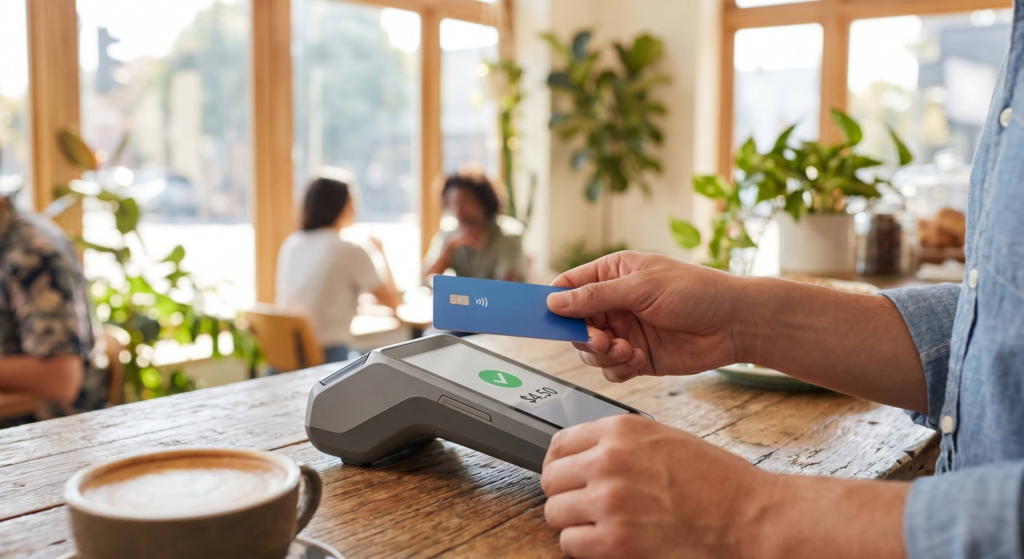
Beyond housing, Bilt has built a “neighborhood” network where you can earn points on regular spending. You usually just link a credit card to your Bilt account, and the points stack on top of whatever your card already earns. The most useful ones for most people:
- Dining: earn extra points at participating restaurants when you pay with a linked card
- Walgreens: earn on purchases (including a points bonus on prescription refills) with a linked card
- Fitness classes: earn on classes at partner studios when booked through the Bilt app
- Lyft: earn extra points on rides once you link your Lyft and Bilt accounts
- Rakuten shopping: Rakuten is a shopping rewards site that pays you back when you start your online shopping through its links, and you can route those rewards to Bilt. This is generally only worthwhile if you hold Bilt status. Without status, another flexible program like American Express® Membership Rewards® may earn you more.
None of these will make or break your travel goals, but they are easy bonus points if you already shop or eat at these places.
A quick word on Bilt Cash (and its one big catch)
Bilt Cash is a secondary currency, separate from Bilt Points. You earn it on card spending and on points you accumulate, and you can use it for things like offsetting the rent processing fee, small monthly credits with partners, and a few other perks.
The catch to remember: Bilt Cash expires on December 31 of the year you earn it, even if you earned it in December. A small amount rolls over, but the rest is “use it or lose it.” So if you are sitting on Bilt Cash late in the year, spend it before it disappears.
Rent Day: one day a month worth knowing about
On the 1st of each month, Bilt runs a 24-hour promotion called “Rent Day.” Despite the name, it is mostly about non-rent spending: Bilt cardholders earn double points on everyday purchases that day, up to a cap, and Bilt often runs extra promotions like increased transfer bonuses and monthly giveaways.
One honest clarification, since the name is misleading: you still only earn the standard rate when paying rent on Rent Day. The doubled earning applies to other purchases. The most valuable part for many people is the occasional transfer bonus, which stretches your points when you move them to an airline or hotel partner. A 25% bonus, for example, would turn 10,000 Bilt Points into 12,500 partner miles.
Where Bilt really shines: transfer partners
Here is the heart of the program. Bilt Points are valuable mostly because of where you can send them. With one exception, points transfer 1-to-1 to airline and hotel programs, and most transfers happen almost instantly. Transferring to the right partner is consistently where you get the biggest value, often far more than you would get redeeming points for cash-like options.
If transfer partners are new to you, the short version is this: instead of locking your points into one airline or hotel, you keep them flexible and only move them when you find an award worth booking. An award is simply a seat or a hotel room the program lets you pay for with points instead of cash.
To see this in action, here is a real example from Travel Freely founder Zac. He once moved 50,000 flexible Chase Ultimate Rewards® points to Hyatt for two nights at the Grand Hyatt Vail, a stay that would have cost roughly $2,400 in cash, and Hyatt award nights waived the resort fees. Bilt transfers to that same Hyatt program 1-to-1, so the same kind of high-value hotel redemption is available to Bilt members.
You do not have to memorize every partner to get started. Below is the full list for reference, with a plain-language note on why each one might matter.
Hotel transfer partners
| Hotel Program | Transfer Ratio | Good to know |
|---|---|---|
| Hyatt | 1 to 1 | Often the best value of any partner; great for free nights and suite upgrades. Award nights skip resort fees. |
| IHG | 1 to 1 | Award prices vary; can offer good value, especially with a fourth-night-free benefit on some IHG cards. |
| Hilton | 1 to 1 | Usually a weaker value since Hilton points are easy to earn elsewhere; transfer only for a specific need. |
| Marriott Bonvoy | 1 to 1 | If you transfer 20,000 points, you'll receive a 5,000 point bonus |
| Wyndham | 1 to 1 | Can be a sleeper deal; some properties let you book multi-room suites for the price of a standard room. |
| Accor | 3 to 2 | The one partner that is not 1 to 1. Points are used toward the hotel bill; best for European stays. |
Airline transfer partners
| Airline Program | Network | Why it might matter to you |
|---|---|---|
| Air France KLM Flying Blue | SkyTeam | Frequent monthly promo deals; can book Delta and other SkyTeam flights. Strong for US to Europe. |
| Air Canada Aeroplan | Star Alliance | No fuel surcharges; books a wide range of Star Alliance airlines. |
| United MileagePlus | Star Alliance | Free award changes and cancellations, and never charges fuel surcharges. |
| Avianca LifeMiles | Star Alliance | Reasonable prices and no fuel surcharges; can be great for premium-cabin awards. |
| Turkish Airlines Miles and Smiles | Star Alliance | Home to several standout sweet spots, including low-cost flights within the US and to Hawaii. |
| Virgin Atlantic Flying Club | SkyTeam partner | Known for a handful of excellent sweet-spot awards. |
| British Airways Avios | Oneworld | Good for short flights; Avios move freely between BA, Iberia, Aer Lingus, Qatar, and Finnair. |
| Iberia Avios | Oneworld | Low award prices on its own flights and a reasonable cancellation fee. |
| Aer Lingus Avios | Oneworld | Sometimes has lower fuel surcharges than other Avios programs. |
| Qatar Privilege Club Avios | Oneworld | Reasonable prices on Qatar's own flights; can also book JetBlue. |
| Finnair Plus | Oneworld | Part of the Avios family; pricing can be better or worse depending on the route. |
| Alaska Atmos Rewards | Oneworld | Allows free stopovers on one-way awards and easy changes and cancellations. |
| Cathay Pacific Asia Miles | Oneworld | A solid option for booking American Airlines and other partners by distance. |
| Japan Airlines Mileage Bank | Oneworld | Distance-based pricing that can be a great deal on certain partner flights. |
| Emirates Skywards | Independent | Best for flying Emirates itself, though fuel surcharges can be steep. |
| Etihad Guest | Independent | Can offer good value on short but pricey flights. |
| TAP Air Portugal | Star Alliance | Useful for flights between the US and Europe. |
| Southwest Rapid Rewards | Independent | Fully refundable award flights; great for flexible domestic travel and family trips. |
Other solid ways to use Bilt Points
A quick note on the numbers below, since this is where beginners get tripped up. “Cents per point” is just a way to measure what a point is worth when you cash it in. At 1.25 cents per point, 10,000 points covers $125 of travel. It is the fastest way to compare one redemption against another, and transfers to partners usually beat everything on this list.
Transfer partners are usually the best value, but a few other redemptions are reasonable depending on your situation:
- Book travel through the Bilt portal at a value of about 1.25 cents per point. You will often get more by transferring to a partner, but the portal is a simple, dependable option for hotels and certain experiences (like theme park tickets) when you do not want to hunt for award availability. Note a two-night minimum applies when using credits or Bilt Cash toward a stay.
- Put points toward a home down payment at a value of about 1.5 cents per point, with one redemption allowed per home purchase. This is a niche use, but if you are buying a home, it is one of the better cash-like values Bilt offers.
- Pay down student loans at a value of about 1 cent per point with several major servicers. Not glamorous, but a fair value if travel is not your priority right now.
Bilt redemptions to skip
We will always tell you the honest version, including when something is a bad deal. These redemptions give you noticeably less value (often well under 1 cent per point), so avoid them unless you have a specific reason:
- Paying rent with points: you get less than 1 cent per point. If you only want cash-like value toward rent, a flat 2% cash back card would likely serve you better.
- Amazon and gift card purchases: roughly 0.7 cents per point. Skip these.
- Lyft rides (redeeming points): also around 0.7 cents per point. Earning points on Lyft is fine; spending them on Lyft is not.
- Statement credits: the worst of the bunch at around 0.55 cents per point.
One safety tip if you do link Bilt to Amazon: it is generally wise not to leave rewards programs linked to shopping accounts long-term. If a shopping account is ever compromised, linked points can be vulnerable. Link only when you need to, then unlink.
Bilt elite status, in plain English
Bilt has an elite status program with four tiers. Status is just a level you reach by using the program more, and it unlocks a few extras. You do not need to chase it to benefit from Bilt, but higher status unlocks better Rent Day transfer bonuses, lower transfer minimums, a small amount of bonus points on your balance, and access to a luxury hotel booking platform at the top tiers. Here is the simplified picture.
| Tier | How you reach it | What it unlocks (plain English) |
|---|---|---|
| Blue | Automatic when you enroll (under 50,000 points) | Entry level; access to the program and Rent Day. |
| Silver | 50,000 points earned in a year, or $10K in qualifying non-rent spend | A small amount of bonus points on your balance, better Rent Day offers, and lower transfer minimums. |
| Gold | 125,000 points earned, or $25K in qualifying non-rent spend | Everything in Silver, plus access to Bilt's luxury hotel booking platform and earlier Rent Day booking windows. |
| Platinum | 200,000 points earned, or $50K in qualifying non-rent spend | Everything above, plus top-tier perks including an option for airline elite status through a partner. |
For most beginners, status is something that happens naturally as you use the program, not a goal to organize your spending around.
The bottom line: is Bilt right for you?
Bilt is one of the few ways to earn flexible travel points on rent and mortgage, and its transfer partners make those points genuinely valuable. If you pay housing every month, pay your balances in full, and like the idea of flexible points, Bilt deserves a look, and the no-fee Bilt Blue Card is a low-risk way to try it.
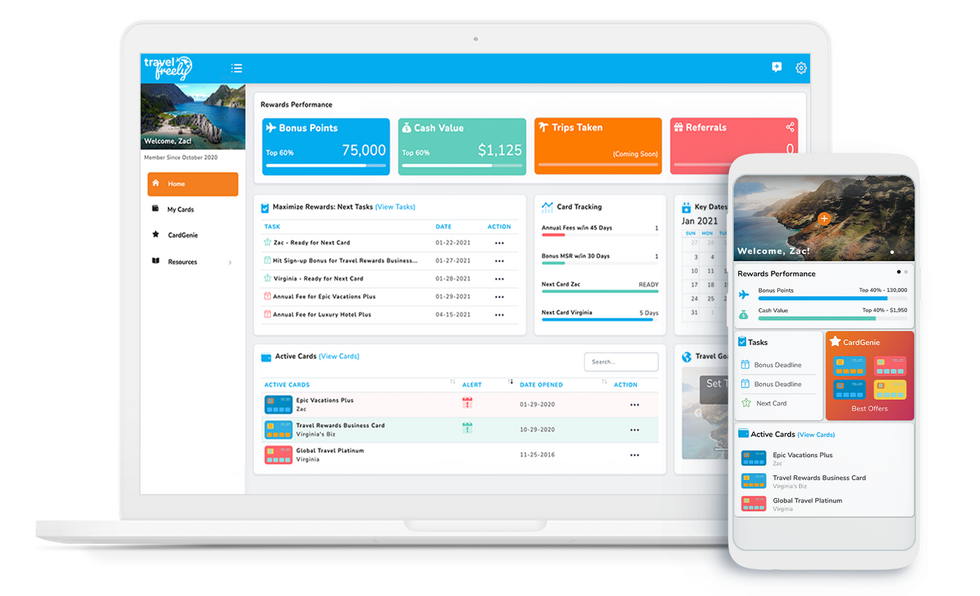
If you are brand new and just want the simplest first step, a flexible starter card is usually an easier on-ramp before you layer Bilt on top. Either way, the free Travel Freely app keeps your cards, bonuses, and annual fee dates in one place, about 10 minutes a month.
A quick note on how we make money: Travel Freely earns a commission when you apply for a card through links on our site, at no cost to you. In return, we promise to always show you the best offers, even the ones that earn us nothing. Trust comes first, always.
Note: This article was inspired by Frequent Miler – any content used with permission.